 Lingualite
Built for the second hour of learning.
Most language apps get you through the first 100 words. Lingualite is what you use after that — when you actually want to read, write, and speak.
How it started.
I'd spent more than a year on a popular language app, accumulated a small mountain of XP, and could still barely read the back of a cereal box in Spanish. The problem wasn't motivation — it was that the app I was using had no idea what I already knew, kept reshuffling the same first hundred words, and turned every session into a small, brightly coloured anxiety machine.
So I started writing the app I actually wanted: one course, twenty-eight days, a flashcard deck that grew with me, and a quiet review screen with no streak counter trying to guilt me into staying. Lingualite is what came out the other side. It's a one-person project, made for the kind of learner who's already past the welcome screen.
How spaced repetition works.
Every card you see lives in one of five buckets. Get it right and it moves toward Mastered, where it's only checked occasionally. Get it wrong and it slides back toward Trouble, where you'll see it again soon. The deck quietly rebalances itself after every session — no settings to configure, no algorithms to choose.
Cards you've never seen, queued from today's lesson.
First few correct answers — still fragile, shown often.
A wrong answer dropped them here. Resurface tomorrow.
Mostly right. Spacing widens as confidence grows.
Quietly held in long-term memory. Checked rarely.
The eight on offer.
Each one has a full 28-day course and a flashcard deck. You can learn from any of them too — the interface language is decoupled from the target language.
Latin American and European Spanish, side by side.
Standard Italian — the language of the kitchen and the bar.
Metropolitan French with audio for tricky liaisons.
Hochdeutsch, with grammar notes for cases and word order.
Stockholm-standard Swedish with pitch-accent prompts.
Bokmål — the most common written form of Norwegian.
For learners coming from any of the other seven.
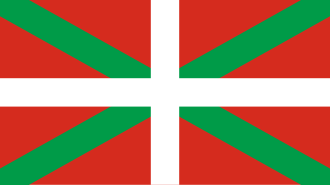
Euskara — a language with no living relatives. A small course, made carefully.
Start your first course today.
Free to begin. No account required.